
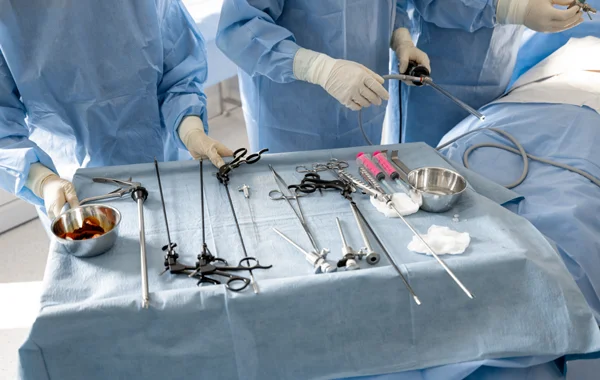
Laparoscopic surgery, also known as minimally invasive surgery, has transformed the way many surgical procedures are performed today. This advanced technique uses small incisions, a camera, and specialized instruments to perform surgery with high precision. Compared to traditional open surgery, laparoscopic procedures offer several benefits such as less pain, smaller scars, faster recovery, and shorter hospital stay. It is widely used for treating conditions like hernia, gallbladder stones, appendix problems, and other abdominal issues. The procedure allows surgeons to clearly view internal organs on a screen and operate with accuracy. Patients often return to their daily routine much sooner than with conventional surgery. Modern hospitals and surgical centers now prefer laparoscopic techniques because of their safety and effectiveness. Proper evaluation and planning ensure the best outcomes for each patient. With experienced surgeons and advanced equipment, patients can expect reliable and comfortable treatment.
Laparoscopic surgery is a minimally invasive surgical method where small cuts are made in the abdomen, and a tiny camera (laparoscope) is used to guide the surgeon during the procedure.
Smaller surgical incisions
Faster recovery time
Less postoperative pain
Reduced hospital stay
Minimal scarring
Lower risk of infection
Hernia problems
Gallbladder stones
Appendix infection
Abdominal pain causes
Digestive system disorders
Certain obesity conditions
During laparoscopic surgery, small incisions are made and a camera is inserted to view the internal organs. Surgical instruments are then used to perform the procedure safely. The operation is done under anesthesia, and patients usually recover faster compared to open surgery.
1. Is laparoscopic surgery safe?
Yes, it is a safe and widely used surgical technique.
2. How long does the surgery take?
It depends on the condition being treated.
3. Is hospitalization required?
Most patients require a short hospital stay.
4. Will there be scars after surgery?
Scars are very small compared to open surgery.
5. How soon can I return to work?
Many patients return within a few days to a week.
6. Is laparoscopic surgery painful?
Pain is usually minimal and manageable.
7. Who is eligible for laparoscopic surgery?
Eligibility depends on the patient’s condition and medical evaluation.
8. What are the benefits over open surgery?
Faster healing, less pain, and better recovery.



Comments
Be the first to review